
The Department of Health (DOH) collects data on flu activity (PDF) in Washington state all year. DOH publishes flu activity reports every week from the fall through the spring.
The flu vaccine is your best protection against flu
- DOH recommends a yearly flu vaccine for everyone aged six-months and older, including pregnant and nursing people. If you are 65 or older, talk to your provider about flu vaccine and other important vaccines for your age group.
- It takes two weeks for the flu vaccine to protect you from flu. The flu vaccine does NOT protect against coronavirus, colds, or other viruses that cause respiratory illness.
- The flu vaccine keeps many people from getting the flu. Some people who get the flu vaccine may still get sick. If you do get the flu, the vaccine will help reduce the severity of your illness. It will also lower your chance of needing to go to the hospital.
- When you get the flu vaccine you will also protect your family and community.
- You may also stop flu by covering your coughs and sneezes, washing your hands for 20 seconds with soap and water, and staying home when you're sick. Cloth face coverings (masks) help prevent the spread of COVID-19 and the flu.
What's new for flu for 2023-2024
It's best to get your family vaccinated for flu by October, but the flu vaccine is still available through winter. You may visit your local doctor's office, pharmacy or clinic event in your area. See www.vaccines.gov or call the Help Me Grow Washington hotline at 1-800-322-2588 (language assistance available) to find a flu vaccine location near you.
- In Washington, all children under age 19 get flu vaccines and other recommended vaccines at no cost.
- The provider may charge an administration fee to give the vaccine. You can ask them to waive this fee if you cannot afford it.
- Most insurance plans, including Medicare part B, cover the cost of flu vaccine for adults.
- Flu and COVID-19 vaccines can both be received in the same day, or even the same visit for convenience.
- Talk to your local health department for information about other no-cost flu vaccine options that may be available in your community.
If you do feel sick with flu, it's important to know when to stay home and when to get emergency medical care.
Prevent Flu and other respiratory viruses
Take these actions to help keep you and your family safe from respiratory illnesses, including flu, COVID-19, and RSV.
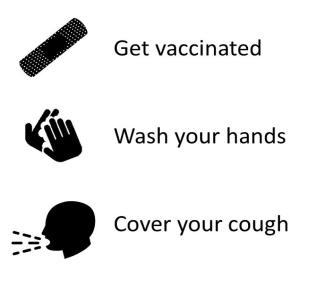
- Get vaccinated if possible. Vaccines for Flu and COVID-19 are your best defense against respiratory illnesses.
- Avoid close contact with people who are sick.
- Stay home and stay safe if you are sick.
- Cover coughs and sneezes with a tissue, or elbow.
- Consider wearing a mask in indoor or crowded places
- Wash your hands regularly. Use soap and water. If there is no soap available, use an alcohol-based hand sanitizer.
- Clean and disinfect surfaces that may be contaminated with viruses.
- Take antiviral drugs if your doctor prescribes them.
Recognize the Emergency Warning Signs of Respiratory Illness
Call 911 when you see:
- Severe trouble breathing (struggling for each breath, can barely speak or cry)
- Passed out or has stopped breathing
- Lips or face are bluish when they are not coughing
- There may be a life-threatening emergency
Get medical help right away for infants when they:
- Have a fever over 100.4F for infants younger than 3 months, or
- Fever for more than 24 hours if older than 3 months
- Have fast or labored breathing
- Look very ill or is unusually drowsy or difficult to console
- Have significantly fewer wet diapers than normal
Children should go to the ER when they:
- Have fast or labored breathing
- Are not able to drink enough fluids
- Have very decreased alertness and activity
- Have a fever for more than 72 hours, or their temperature repeatedly rises above 104F
Adults should go to the ER with any of these:
- Difficulty breathing or shortness of breath
- Chest pain
- Confusion
- Worsening fever and cough, especially with pink or bloody mucus
Other Resources
- Flu Free Washington Partner Toolkit (partner promotional toolkit)
- CDC Digital Media Toolkit: 2023-2024 Flu Season (CDC)
- Get your child's immunization records
- Washington State Weekly Influenza Update (PDF)
- What To Know About This Flu Season (CDC)
- The Flu: What To Do If You Get Sick (CDC)
- Similarities and Differences Between Flu and COVID-19 (CDC)
- Differences Between Flu and Cold (CDC)
- Flu Materials and Resources
- Flu Resources for Parents
- Influenza (Flu) Information for Public Health and Healthcare Professionals
- Flu Free at Work Toolkit (PDF)